
ProtoSphere
 |
A GPU-Assisted Prototype Guided Sphere Packing Algorithm for Arbitrary Objects
We present a new algorithm that is able to efficiently compute a space filling sphere packing for arbitrary objects. It is independent of the object's representation (polygonal, NURBS, CSG,...); the only precondition is that it must be possible to compute the distance from any point to the surface of the object. Moreover, our algorithm is not restricted to 3D but can be easily extended to higher dimensions.
The basic idea is very simple and related to prototype based approaches known from machine learning. This approach directly leads to a parallel algorithm that we have implemented using CUDA. As a byproduct, our algorithm yields an approximation of the object's medial axis that has applications ranging from path-planning to surface reconstruction.
Sphere packings have proven to be very efficient when doing collision detection, which was the starting point of our research.
For further informations about our new geometric data structure that is based on sphere packings, the "Inner Sphere Trees", please visit our project website.
|
|
|
|
|
|
|

|
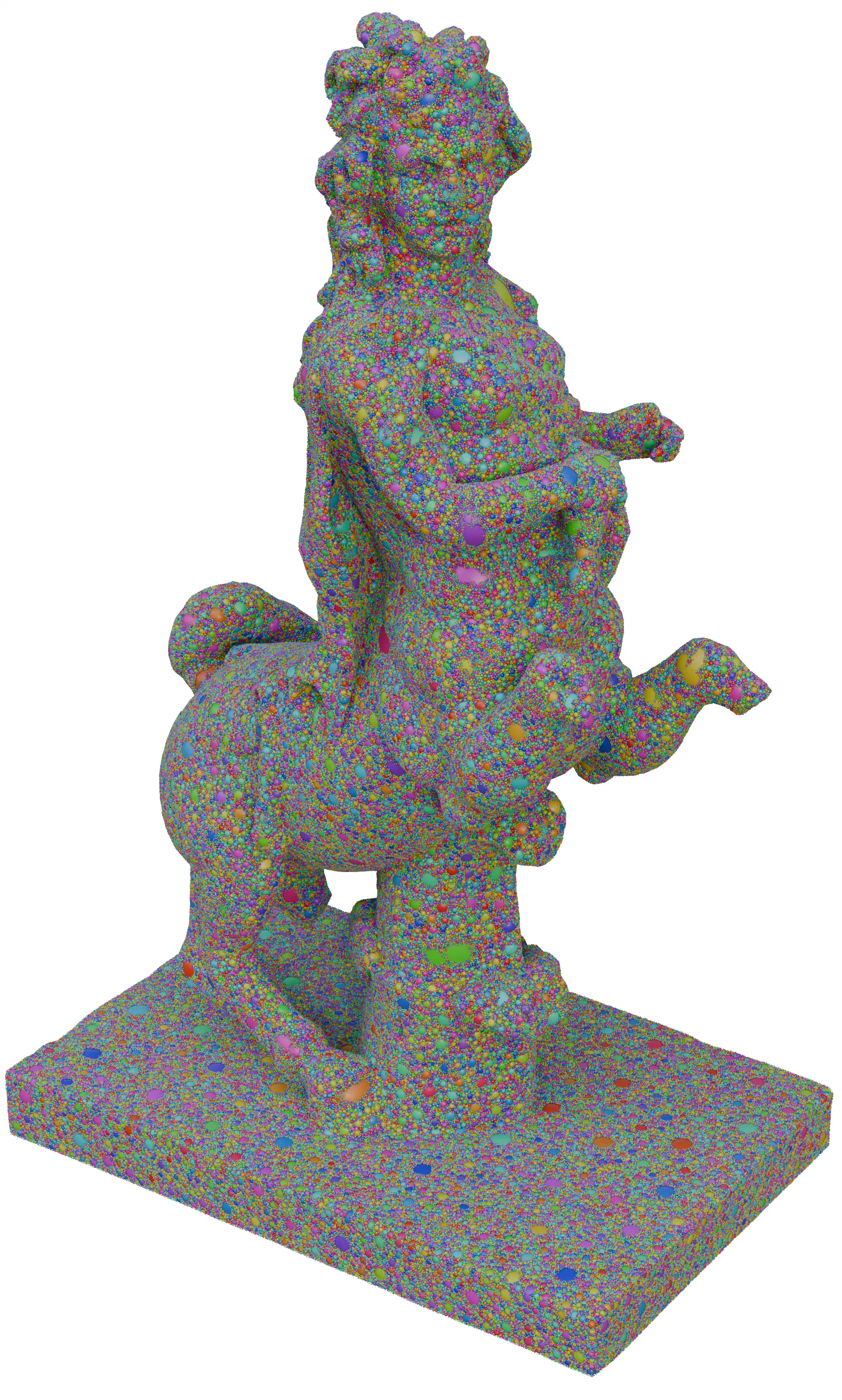
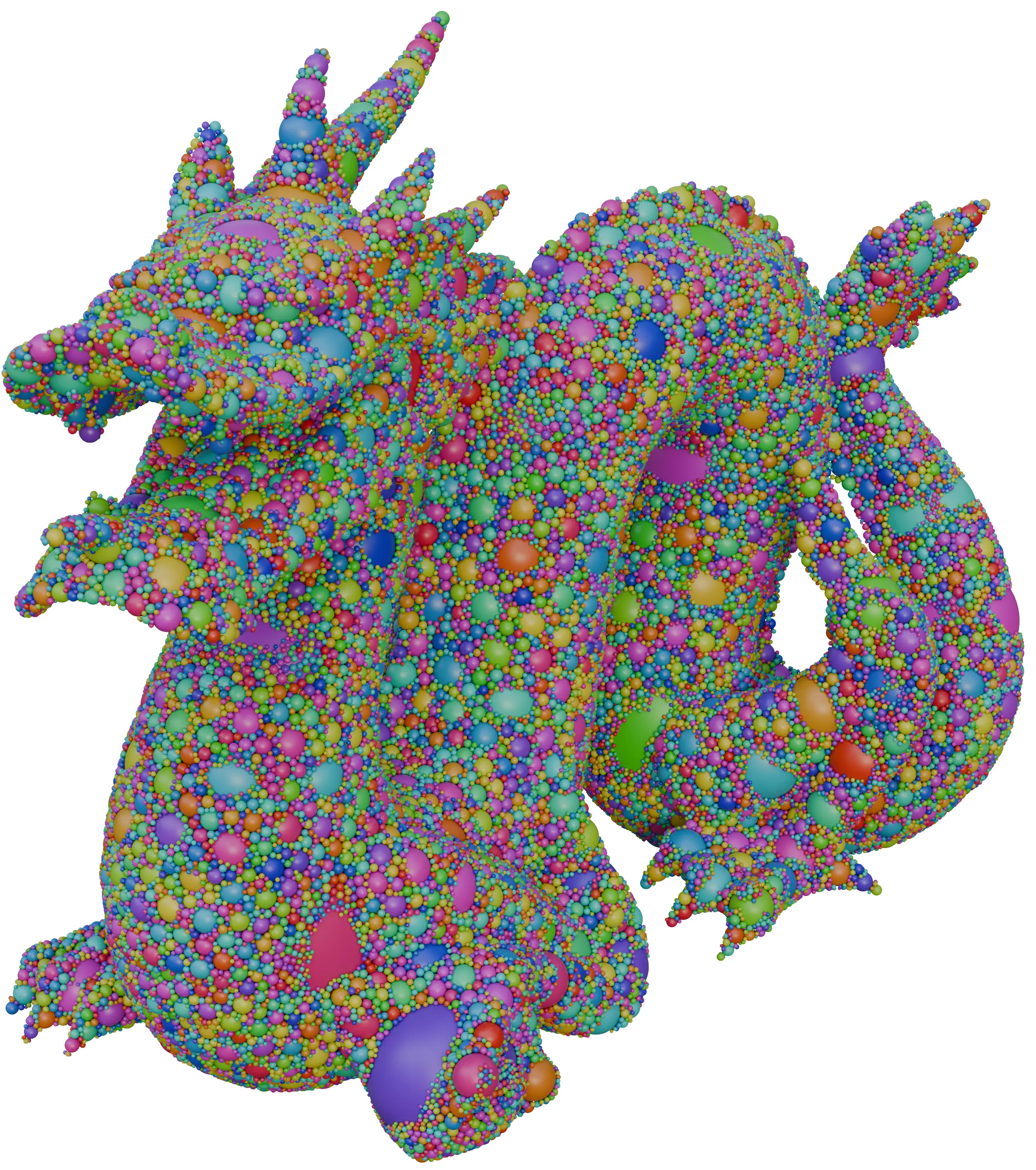
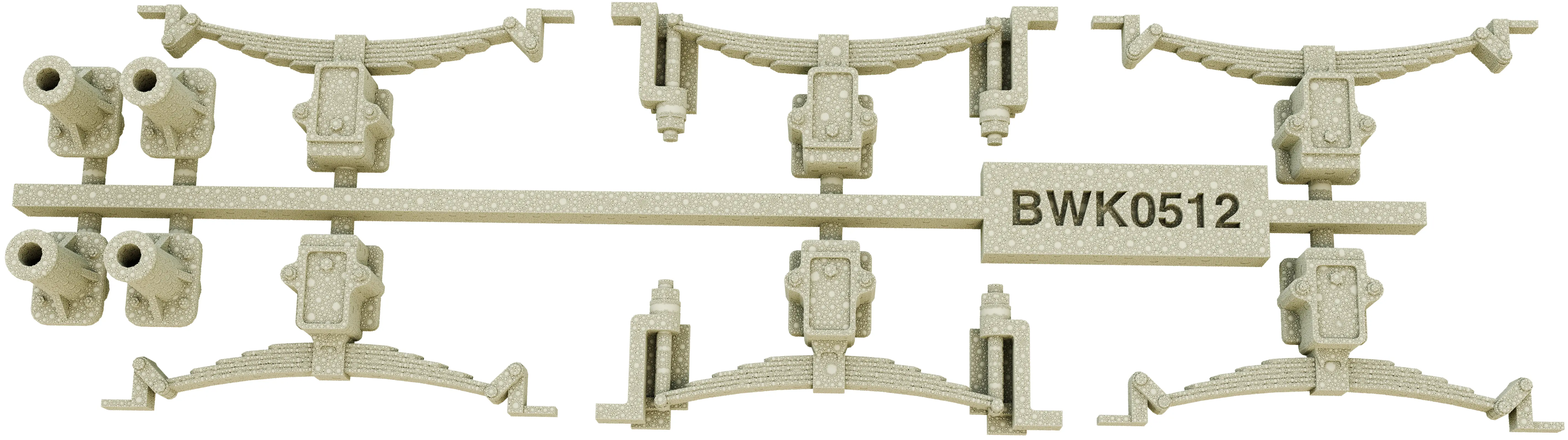
Top row, from left to right. A centaur filled with 2 million spheres, a dragon filled with 100,000 spheres, a rotating view of the same dragon packing, and the BWK model filled with 2 million spheres.
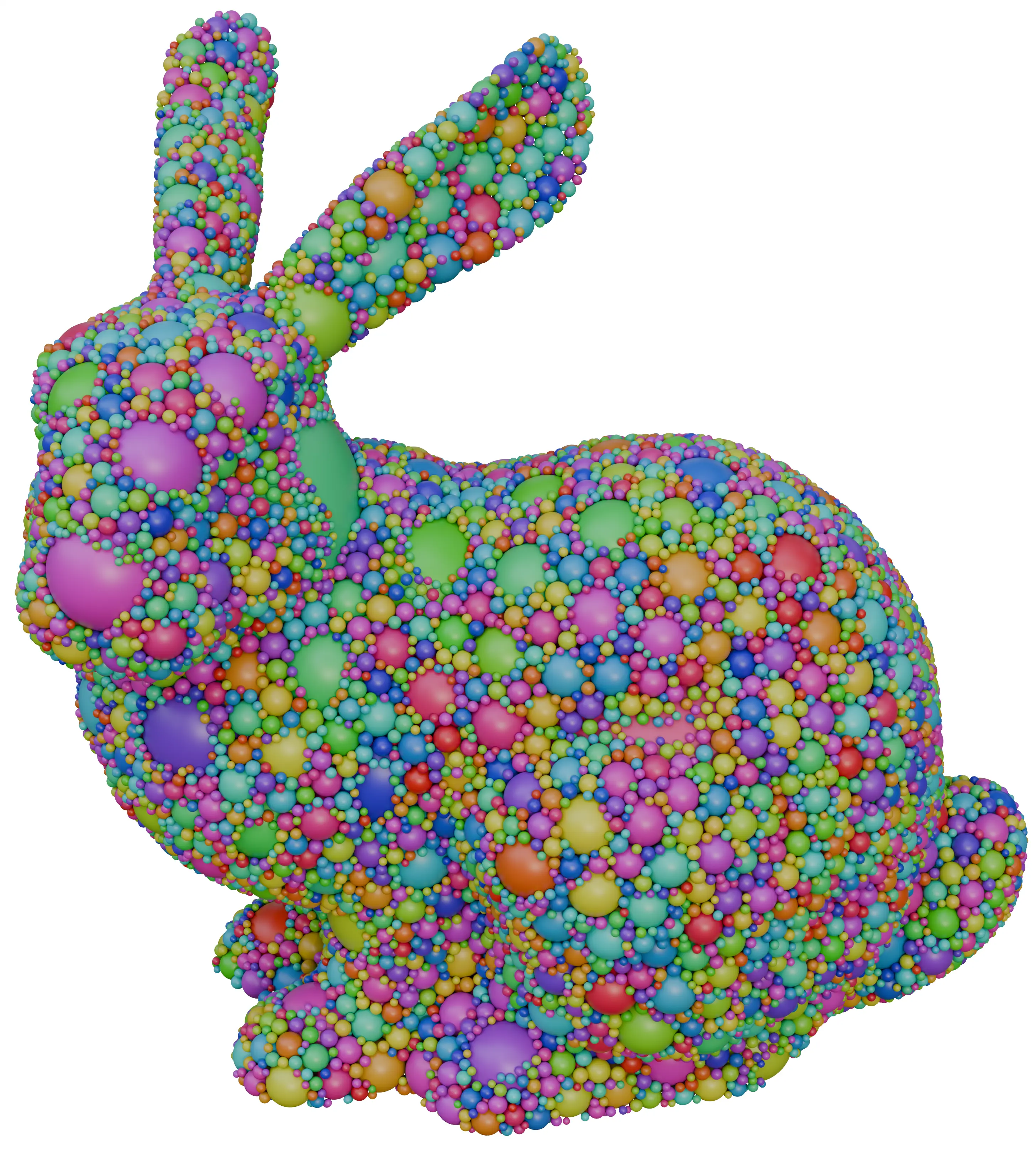
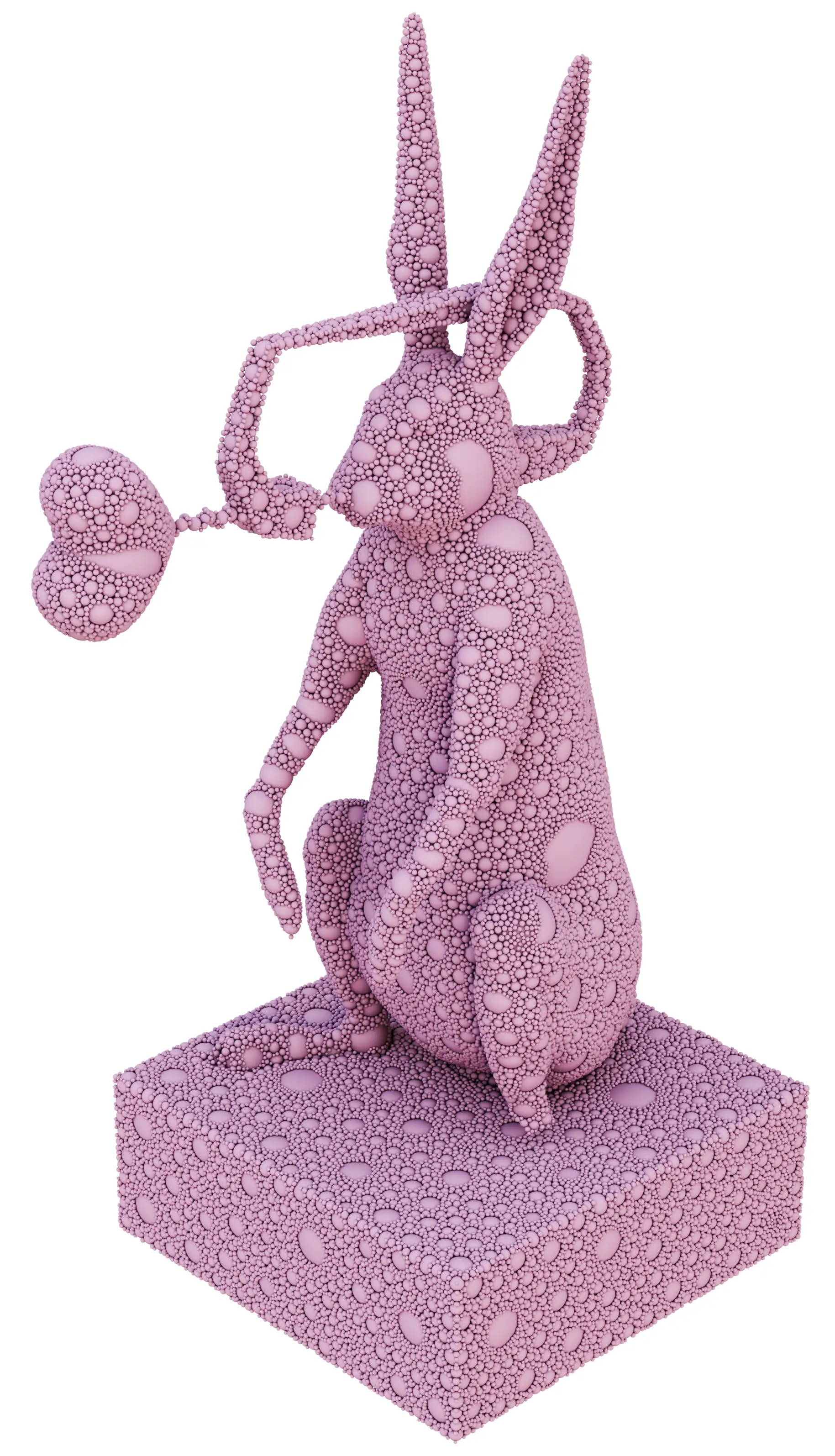
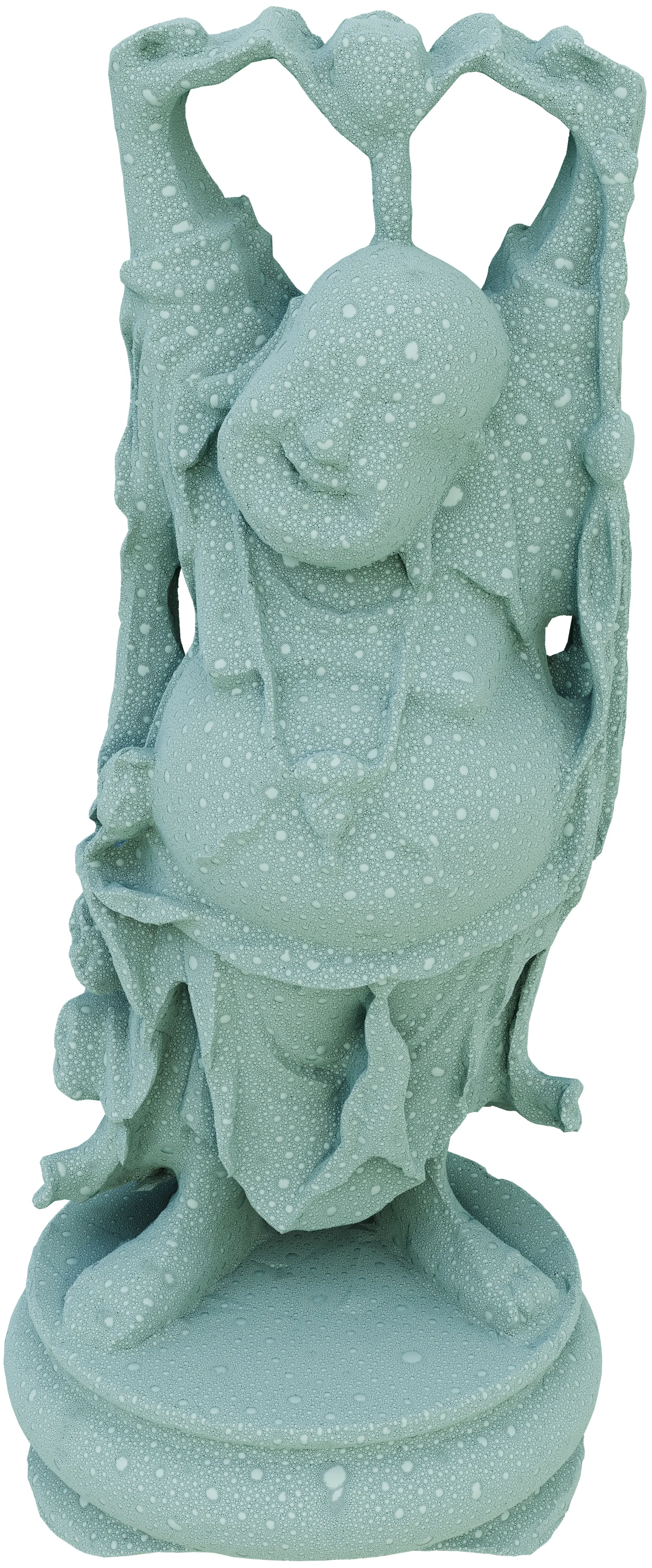
Bottom row, from left to right. A bunny filled with 20,000 spheres, a bunny with a heart filled with 100,000 spheres, a Buddha model filled with 10 million spheres, and an approximation of the dragon’s medial axis. Our algorithm produces this approximation as a side effect of its first iteration.
Interactive Visualization
Sample Files
Download a pair of files, then drag and drop them directly into the viewer below. Viewer is available here.
- Cube: cube.obj cube.spheres
- Bunny: bunny.obj bunny.spheres
Source code and CGAL bindings
- ProtoSphere source code is available on GitLab.
- CGAL bindings are also available. See the CGAL Sphere Packing documentation.
Publications
- ProtoSphere: A GPU-Assisted Prototype Guided Sphere Packing Algorithm for Arbitrary Objects , IEEE , 2011. [BibTex]
Videos on Youtube
Visualization of our Algorithm
This work was partially supported by DFG grant ZA292/1-1 and the
 research project,
funded by the Federal Minstry of Education and Research (BMBF) grant Avilus / 01 IM 08 001 U.