
Augmented Virtuality for Trombone Learning: A Prototype for Real-Time Slide Position Guidance and Precision Evaluation
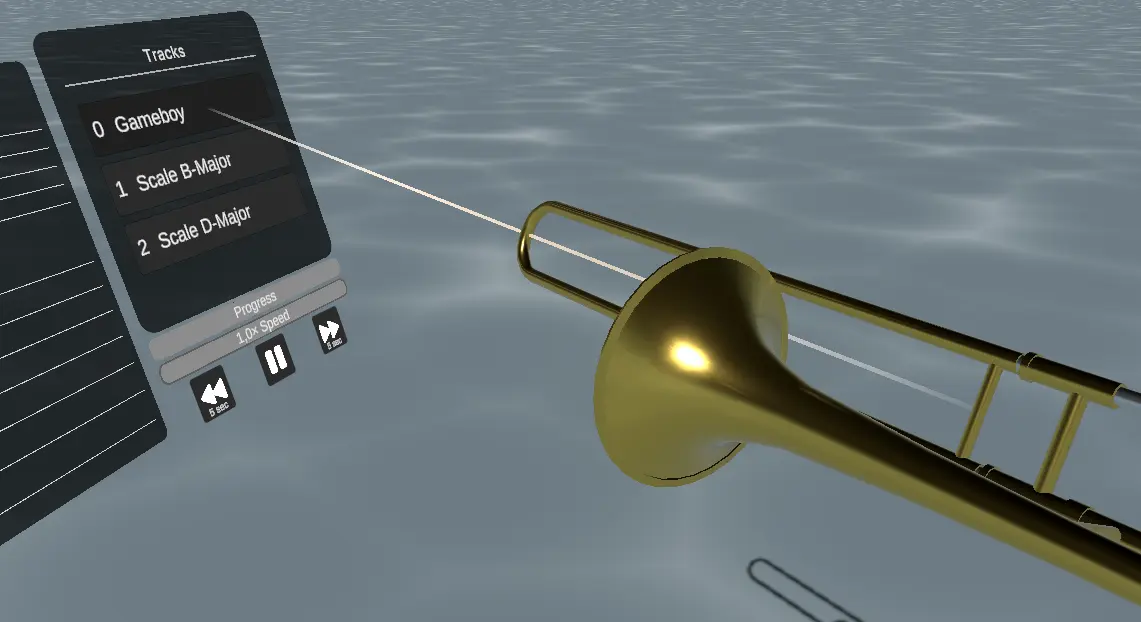
This thesis develops and evaluates a prototype for a slide positioning support system utilizing extended reality.
Utilizing six degrees of freedom tracking technology the real trombone gets translated into an XR environment,
allowing the trombone itself to become a UI input device to not rely on a controller and increase immersion.
A MIDI-based visualization guides the player with both the traditional staff system next to a slide positioning support system.
By evaluating the tracking information,
the prototype provides instant feedback on the positioning accuracy.
A small user-study with 17 participants has been conducted on this prototype to gain initial indications on the usability of the prototype,
possible practice motivation increase,
and effectiveness in improving positioning.
The results show that the prototype is highly usable,
may have benefits for motivation and increases the precision while practicing.
However while performing,
the experimental group only showed small improvements over the control group,
with no statistically significant difference.
Description
The goal of this thesis is to provide real-time visual feedback on the slide position while allowing players to practice with their actual instrument. Using two HTC Vive trackers, the system captures the position of the trombone and its slide. Another one is used to track the position of the trombone stand, to give the player a real world reference point and simplify calibration. Audio-based pitch detection is used using the YIN algorithm to identify played notes and estimate the harmonic, which allows the system to account for differences in slide positions across partials. The application was developed in Unity and provides musical instructions based on MIDI files. These are displayed through conventional sheet music as well as visualisations of the required slide positions. A theoretical acoustic model calculates the target positions from the frequency of the played note, which are then compared with the tracked position of the physical slide.
Additionally, the trombone itself can be used as a input device to interact with the virtual interface. By slightly sliding out the slide while pointing it at a virtual button, the player can press it. This allows the players to navigate the application without putting down their instrument to pick up a controller, which may increase usability.
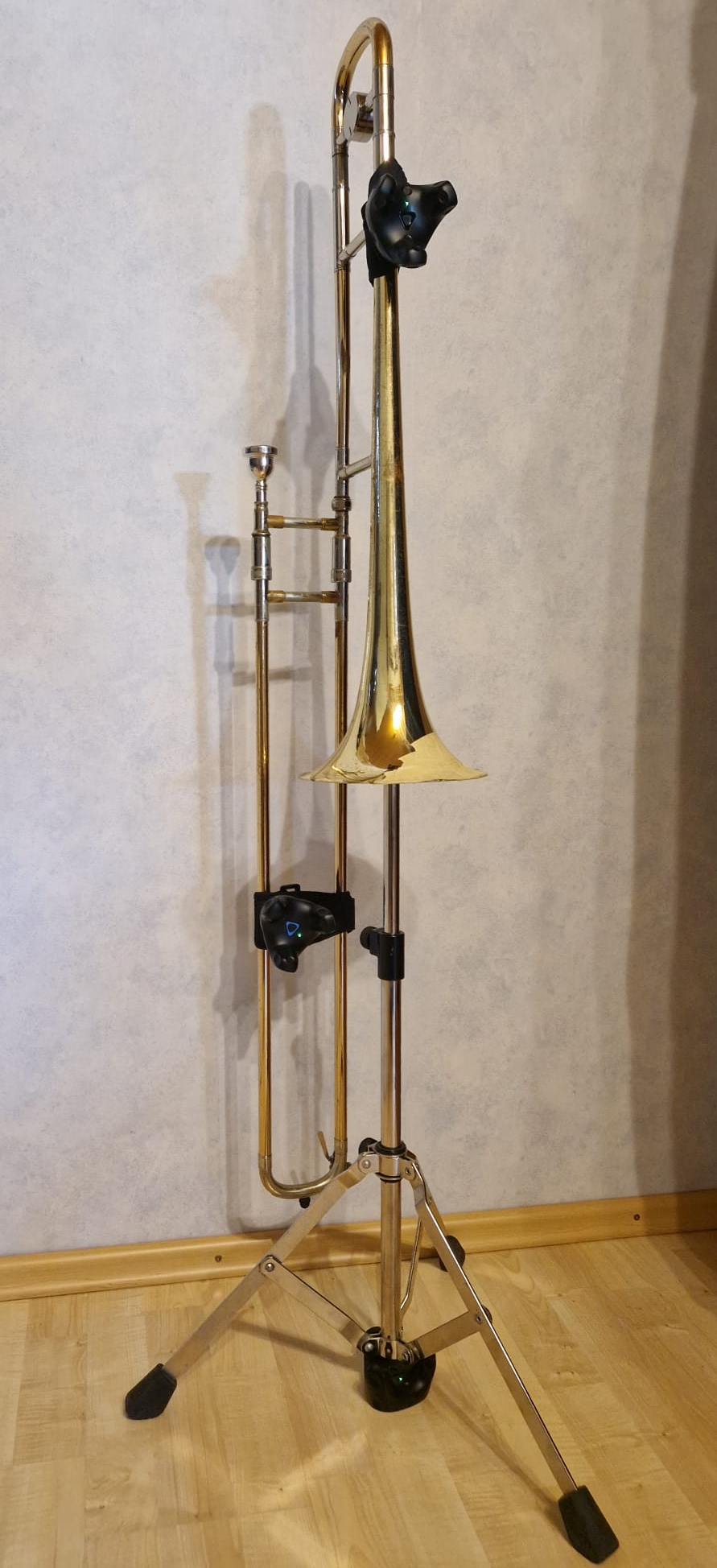
Figure 1: Trombone with trackers
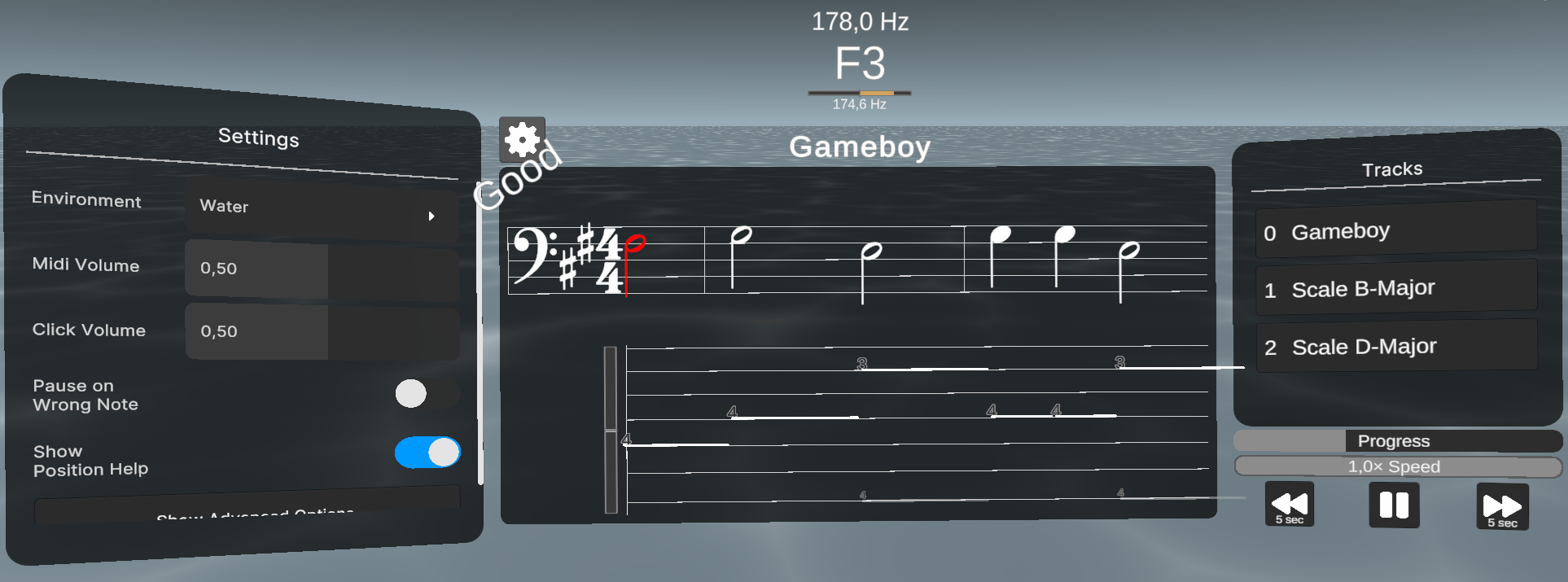
Figure 2: UI and Music Track Representations
To evaluate the prototype, I conducted a user study with 17 participants, comparing practice with and without the advanced slide-position assistance regarding the correctness of and accuracy of the slide positions. Futhermore, I evaluated the usability of the prototype and its potential to increase motivation to practice.
Results
The prototype achieved a mean System Usability Scale (SUS) score of 82.06, significantly exceeding the benchmark of 68. While the mean score excedes the benchmark of 80 the sample size is too small to conclude that the prototype is "excellent" in terms of usability. Participants also rated the application positively regarding its potential to increase their motivation to practice the trombone.
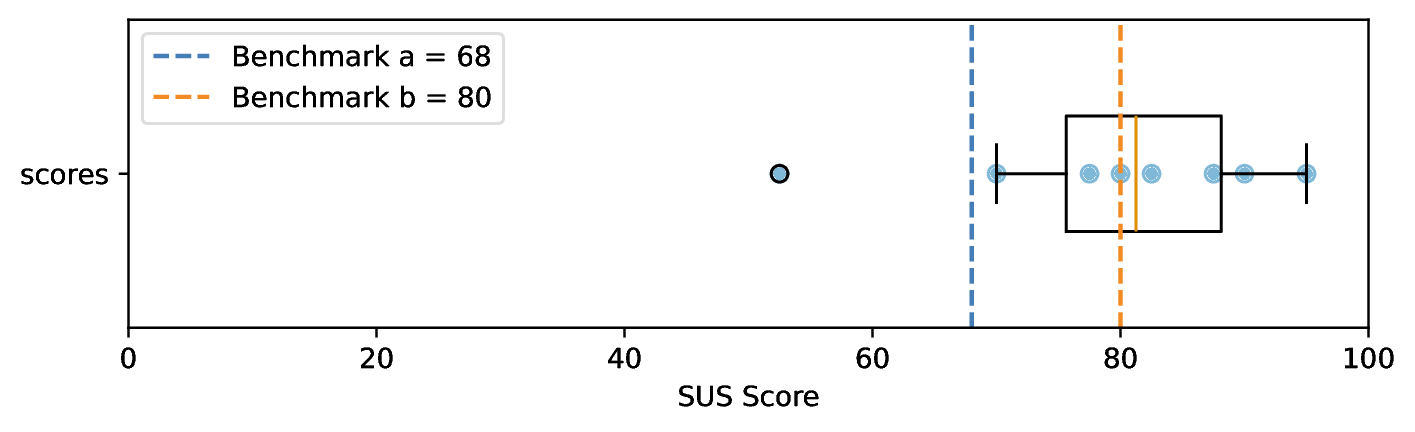
Figure 3: System Usability Scale Score Results
Regarding slide positioning, participants using the advanced assistance achieved significantly better positioning accuracy and were more successful at locating the intended slide positions during training. Once the assistance was removed for the final performance, the experimental group still showed slightly better results on average, but the differences were not statistically significant. The study therefore provides evidence for the effectiveness of immediate visual guidance, but not for lasting improvements in slide-position accuracy or memorization.
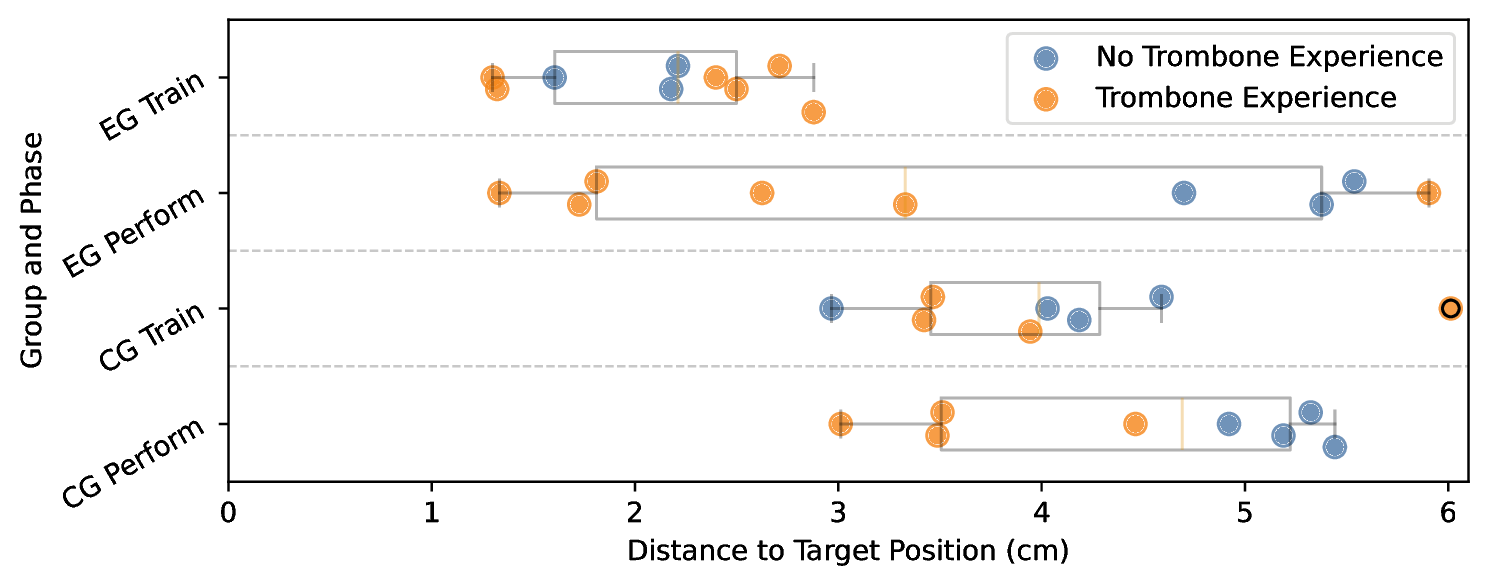
Figure 4: Accuracy of the Individual Participants
These findings should be considered in the context of the small participant sample and the short training period of only ten minutes. In addition, inaccuracies in the theoretical trombone model may have affected both the feedback provided by the application and the evaluation of positioning accuracy.
Files
Full version of the bachelor's thesis (English only)
License
This original work is copyright by University of Bremen.
Any software of this work is covered by the European Union Public Licence v1.2.
To view a copy of this license, visit
eur-lex.europa.eu.
The Thesis provided above (as PDF file) is licensed under Attribution-NonCommercial-NoDerivatives 4.0 International


 .
Any other assets (3D models, movies, documents, etc.) are covered by the
Creative Commons Attribution-NonCommercial-ShareAlike 4.0 International License.
To view a copy of this license, visit
creativecommons.org.
If you use any of the assets or software to produce a publication,
then you must give credit and put a reference in your publication.
If you would like to use our software in proprietary software,
you can obtain an exception from the above license (aka. dual licensing).
Please contact zach at cs.uni-bremen dot de.